Best UK Universities for International Students: Complete Admission Guide 2026
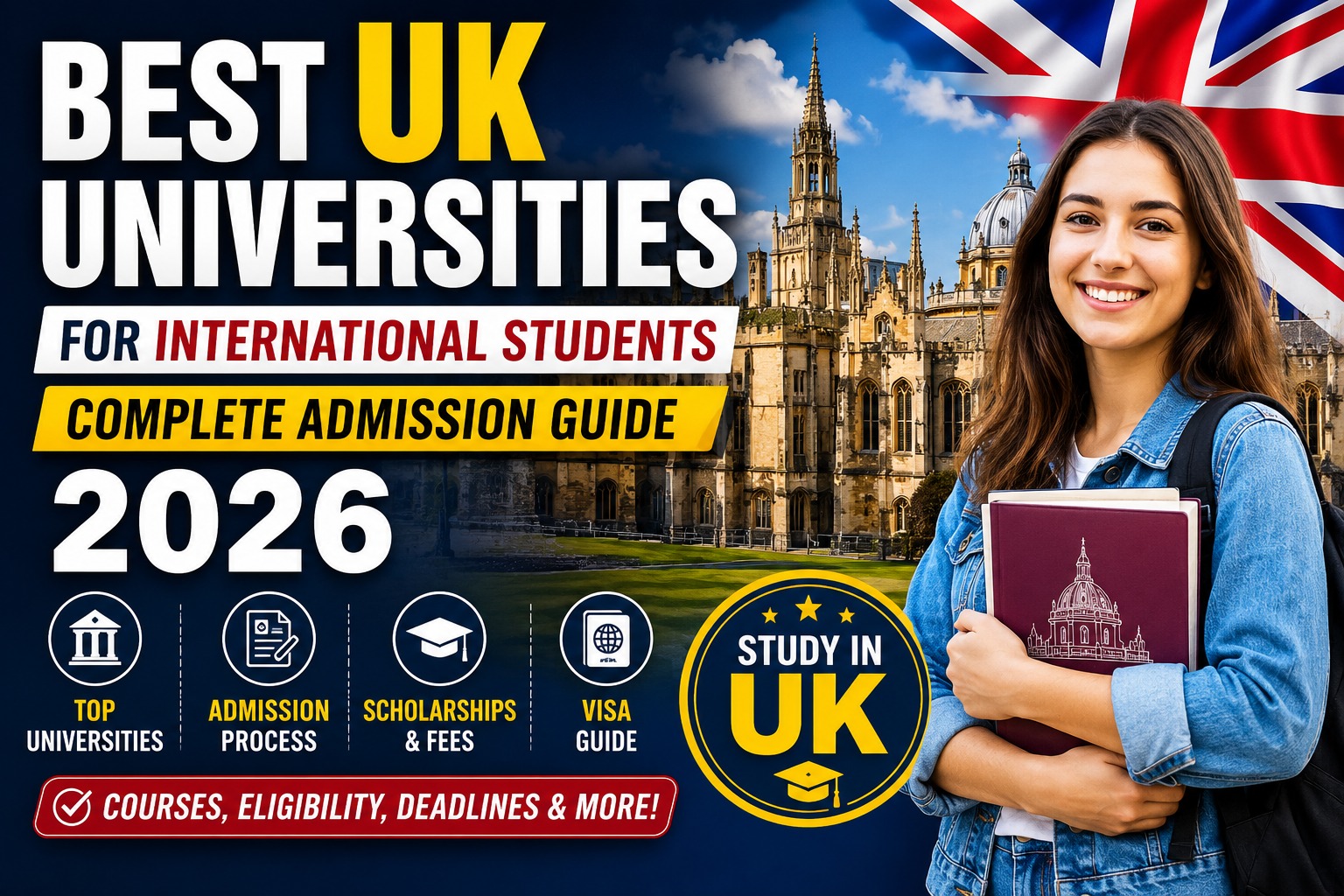
Studying in the United Kingdom remains one of the most rewarding investments an international student can make. With world-class degrees, shorter course durations, and a post-study work visa route, the UK continues to attract over 600,000 international students every year. This complete guide covers the best UK universities for international students in 2026, tuition fees, scholarships, admission requirements, and the student visa process — everything you need to plan your application.
Why Study in the UK in 2026?
The UK offers three major advantages over other study destinations. First, degree duration is shorter — most bachelor's degrees take three years and master's degrees take just one year, which significantly reduces your total tuition fees and living costs. Second, the Graduate Route visa allows international students to stay and work in the UK for two years after graduation (three years for PhD holders). Third, UK degrees are globally recognised, which improves employability whether you stay abroad or return home.
Top 10 UK Universities for International Students in 2026
1. University of Oxford
Consistently ranked among the top universities in the world, Oxford offers exceptional programs in law, medicine, business, and humanities. International tuition fees range from £33,000 to £48,000 per year depending on the course. Admission is highly competitive, requiring outstanding academic records and strong entrance test performance.
2. University of Cambridge
Cambridge is renowned for engineering, natural sciences, and mathematics. International undergraduate fees range from £27,000 to £67,000 per year (medicine being the most expensive). The university offers generous financial aid through the Cambridge Trust for international applicants.
3. Imperial College London
The best choice for STEM students, Imperial specialises in engineering, medicine, computing, and business. Fees average £38,000 to £50,000 annually. Its London location provides unmatched internship and networking opportunities with global tech and finance companies.
4. University College London (UCL)
UCL hosts one of the largest international student communities in the UK, with students from over 150 countries. Popular programs include architecture, economics, data science, and law. Tuition fees range from £28,000 to £42,000 per year.
5. London School of Economics (LSE)
For students targeting careers in finance, economics, politics, or consulting, LSE is unbeatable. Graduate employability is among the highest in Europe, with strong recruitment pipelines into investment banking and international organisations. Fees average £27,000 to £40,000 annually.
6. University of Edinburgh
Scotland's leading university offers strong programs in artificial intelligence, medicine, and literature, with fees between £26,000 and £40,000. Edinburgh is regularly rated one of the best student cities in the world, and living costs are lower than London.
7. University of Manchester
Manchester combines academic excellence with affordability. It is the most targeted university by top UK employers and offers strong programs in engineering, business, and life sciences. International fees range from £24,000 to £38,000 per year.
8. King's College London
Famous for law, medicine, nursing, and international relations, King's offers a central London campus experience with fees between £25,000 and £46,000 per year.
9. University of Warwick
Warwick Business School is one of Europe's most respected, and the university excels in mathematics, economics, and computer science. Fees range from £24,000 to £35,000, with a beautiful campus environment near Coventry.
10. University of Glasgow
A top choice for value, Glasgow offers world-ranked programs in medicine, engineering, and business at fees between £22,000 and £32,000 per year, with living costs far lower than southern England.
UK University Admission Requirements for International Students
While requirements vary by university and course, most institutions expect:
Academic qualifications: For undergraduate courses, you need qualifications equivalent to UK A-levels (such as CBSE/ISC Class 12, IB Diploma, or national high school certificates with strong grades). For master's programs, a recognised bachelor's degree with a minimum of 60–70% or a 2:1 UK equivalent is typically required.
English language proficiency: Most universities accept IELTS (typically 6.5–7.5 overall), TOEFL iBT (90–110), or PTE Academic (62–76). Top universities like Oxford, Cambridge, and LSE require higher band scores. Book your English test at least six months before application deadlines.
Application platform: Undergraduate applications go through UCAS, which opens in September 2025 for 2026 entry. The main deadline is 14 January 2026 for most courses, while Oxford, Cambridge, medicine, and dentistry close on 15 October 2025. Postgraduate applications are made directly to each university.
Supporting documents: A personal statement, academic transcripts, letters of recommendation, and a valid passport. Competitive courses may also require admission tests (LNAT for law, UCAT/BMAT for medicine, MAT/STEP for mathematics).
Scholarships for International Students in 2026
UK education is expensive, but several fully funded and partial scholarships can dramatically reduce costs:
- Chevening Scholarships — fully funded master's degrees covering tuition, living allowance, and flights, funded by the UK government.
- GREAT Scholarships — £10,000 towards one-year master's programs at participating universities.
- Commonwealth Scholarships — fully funded postgraduate study for students from Commonwealth countries.
- Rhodes Scholarships (Oxford) and Gates Cambridge Scholarships — prestigious fully funded awards.
- University-specific awards — most universities offer merit-based international scholarships worth £3,000–£10,000 per year; apply early as funds are limited.
UK Student Visa Requirements 2026
International students need a Student Visa (formerly Tier 4). Key requirements include a Confirmation of Acceptance for Studies (CAS) from your university, proof of funds covering first-year tuition plus living costs (£1,483 per month for London, £1,136 per month outside London, held for at least 28 days), a valid passport, English proficiency evidence, and the Immigration Health Surcharge payment (£776 per year). The visa application fee is £490. Apply up to six months before your course starts, and expect a decision within three weeks.
Cost of Living for International Students
Budget £12,000–£15,000 per year outside London and £15,000–£18,000 in London. University accommodation typically costs £600–£1,200 per month. Students can work up to 20 hours per week during term time, which helps offset expenses.
Final Tips for a Successful Application
Start your application at least 12 months in advance. Research course content, not just rankings — employability outcomes differ significantly between programs. Write a personal statement that demonstrates genuine subject passion with specific examples. Apply for scholarships simultaneously with admissions, as most deadlines overlap. Finally, prepare visa funds early and keep them untouched in your account for the required 28-day period.
The UK's combination of academic prestige, shorter degrees, and post-study work opportunities makes it an outstanding destination for 2026 entry. With careful planning, strong test scores, and early applications, your place at a top UK university is entirely achievable.